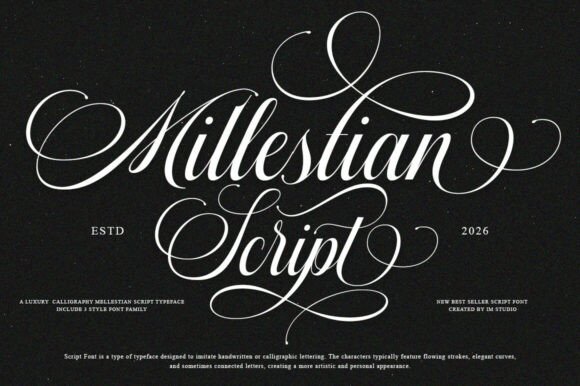
Mallestian Script
Practical Applications Across Creative Disciplines
- Branding & logo design: Ideal for luxury fashion labels, boutique cosmetics, artisanal food brands, or wellness studios seeking a distinctive yet approachable voice.
- Packaging & print design: Enhances premium product presentation—think candle labels, perfume boxes, or handmade soap tags—where tactile quality and visual allure must align.
- Editorial & publishing: Adds refined emphasis to magazine headlines, novel chapter openers, or greeting card copy, reinforcing tone and emotional resonance.
- Digital marketing: Performs beautifully in Instagram story overlays, email headers, and banner ads—especially when combined with minimalist layouts and muted color palettes.
- Web & UI design: Works effectively as a display font for hero sections, testimonials, or CTA buttons—provided it’s used sparingly and with appropriate fallbacks for performance and accessibility.
Design Workflow Tips for Best Results
First, assess your brand’s existing visual language. Does Mallestian Script complement your current color palette, imagery style, and tone? A font shouldn’t dominate—it should deepen coherence. Second, prioritize context over decoration: use it for short, high-impact text (e.g., logos, headings, quotes), not long paragraphs. Third, leverage its PUA encoding—this means all alternates, flourishes, and ligatures are accessible directly from your keyboard or glyph panel, eliminating workflow friction in Adobe Creative Suite or Figma.
Also remember scalability: test how the script renders at various sizes and weights. On mobile screens, even elegant fonts can blur if not optimized—always preview on actual devices. And never underestimate pairing: a well-chosen geometric sans-serif like Montserrat or a warm humanist typeface like Lora creates balance, grounding Mallestian Script’s expressive energy in structure and usability.